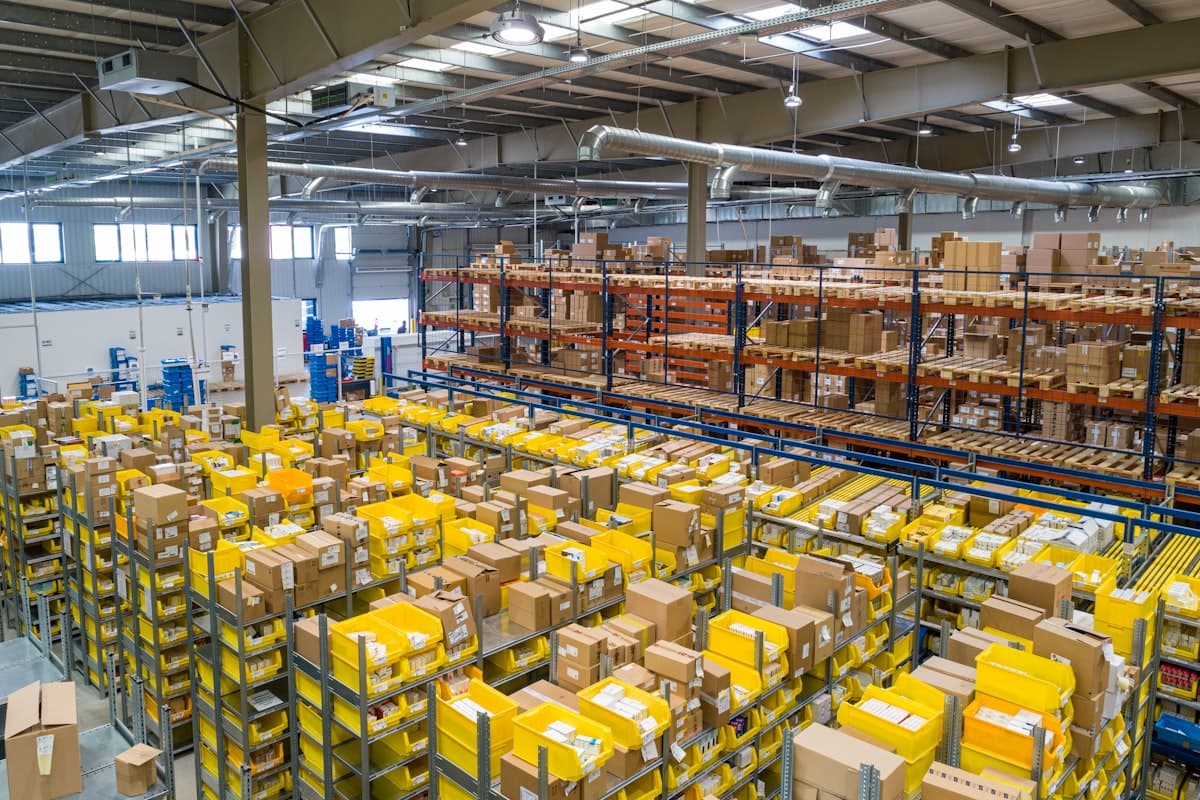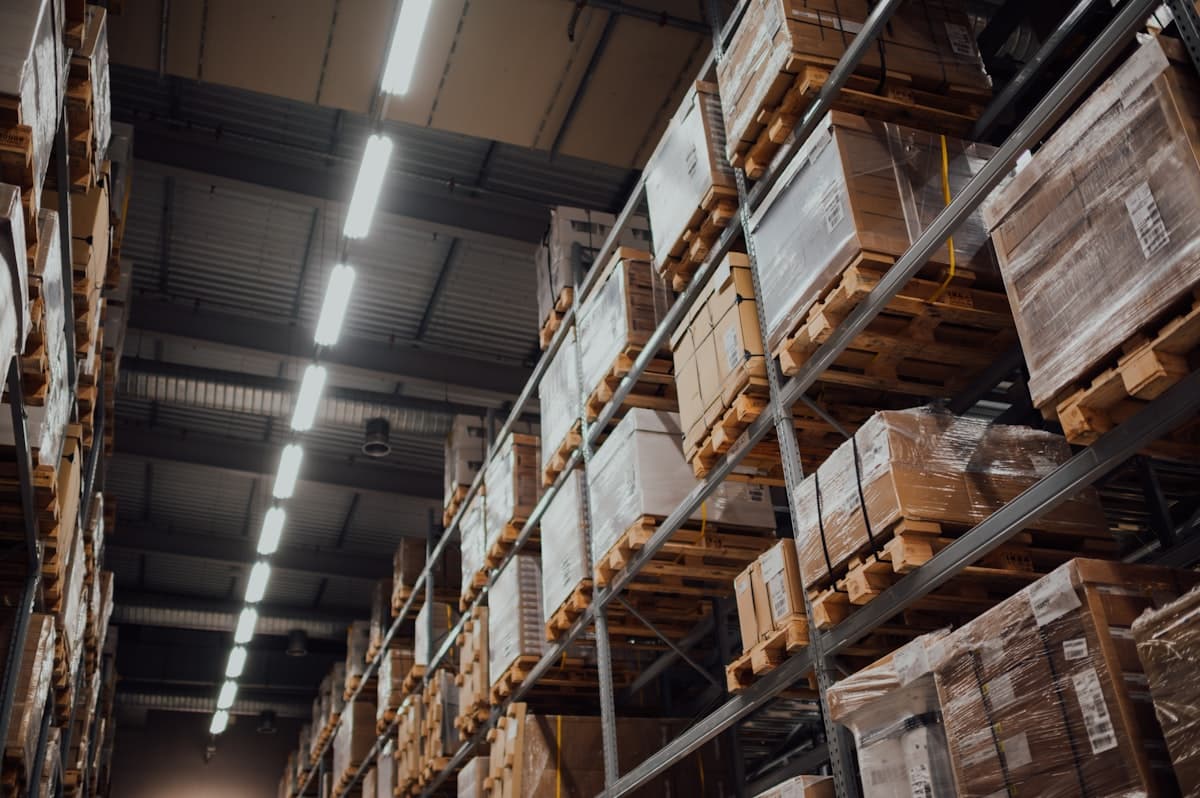

Most companies running inventory across multiple locations discover the same problem the hard way: a customer places an order, the website says "in stock," and then someone on the fulfillment side realizes the available units are split between a warehouse in Atlanta and a 3PL in Dallas — neither of which has enough to fill the order alone. Virtual warehousing is the software architecture that prevents this scenario. The concept is straightforward: one logical view of inventory that spans every physical location, with routing logic that decides which node fulfills each order. The hard part is the engineering underneath it.
What Virtual Warehousing Actually Means in Practice
The term gets used loosely. At its core, virtual warehousing means your order management system (OMS) treats all inventory — whether it's at your owned warehouse, a third-party logistics provider, a retail backroom, or a fulfillment partner — as a single pool. When an order arrives, the system consults a unified inventory record, selects the best fulfillment point, and routes the order there.
This is not the same as having a spreadsheet that aggregates stock counts from different warehouses. A true virtual warehousing setup requires:
- Real-time or near-real-time inventory sync across all nodes
- Routing logic that can evaluate multiple candidates simultaneously
- Bidirectional integration between your OMS, WMS (warehouse management system), and each 3PL
- Reservation and commitment tracking so the same unit can't be allocated to two orders at once
The difference between a working system and a broken one often comes down to how well those four pieces hold together under load.
The Inventory Sync Problem
Getting accurate inventory counts from multiple systems into one place sounds simple. It is not. The challenge is latency — specifically, the window between when a physical event happens (a pick, a receipt, an adjustment) and when your unified inventory record reflects it.
Polling versus webhooks is where most integrations make their first architectural decision. Polling means your system asks each warehouse node "what's your current stock?" on a schedule — every 5 minutes, every 15 minutes, every hour. It's simple to implement, but it creates a lag window during which your unified inventory count is stale. If you're selling fast-moving SKUs, a 15-minute polling interval can cause significant overselling during peak demand.
Webhook-based sync inverts this: when inventory changes at the source, the source pushes an update to your system immediately. This is much closer to real-time, but it introduces new problems. Webhooks fail. Networks drop. Payloads arrive out of order. A receipt webhook that arrives before the corresponding pick webhook can briefly show negative inventory. Any serious implementation needs retry logic, idempotency keys, and a reconciliation job that periodically cross-checks pushed state against actual source-of-truth counts.
Most production implementations use a hybrid approach: webhooks for real-time updates, polling as a safety net to catch anything that slipped through. The polling interval can be much longer (hourly or daily) because it's not the primary sync mechanism — it's a corrective one.
The overselling trap is specific to distributed inventory. When you have 10 units split across three locations, and three orders arrive simultaneously, your system needs to reserve inventory atomically — not just read it. Without proper locking or optimistic concurrency controls, all three orders may read 10 units available, allocate successfully, and then fail at the fulfillment stage when reality doesn't match the record.
Routing Logic: More Than Proximity
Once inventory is synchronized, the system needs to decide which location fulfills each order. The naive implementation routes to the nearest warehouse with available stock. This works until it doesn't.
A more complete routing algorithm weighs several variables:
Proximity to the customer is the most obvious factor, and it does matter — both for shipping cost and delivery speed. But proximity alone produces suboptimal results when one warehouse is consistently closer to your customer base and gets depleted while another sits overstocked.
Shipping cost differentials are significant and often overlooked. A warehouse 200 miles farther from the customer may have negotiated carrier rates that make it cheaper to ship from. The routing engine should have access to rate tables or at least cost-zone approximations.
Inventory balance matters for SKU management and reduces the risk of stockouts at specific nodes. Routing logic that ignores inventory levels across the network will drain one location while another accumulates dead stock.
Fulfillment SLA commitments add another layer. If a specific 3PL partner has a slower pick-pack-ship cycle, it shouldn't be the default choice for same-day or next-day orders, even if it's geographically close.
Split shipment avoidance is often the least considered but most customer-impacting factor. If an order contains five items and four are at Location A while one is at Location B, the system should evaluate whether it's better to ship two packages or to check if all five are available elsewhere. Most off-the-shelf systems handle this poorly.
In practice, routing logic is a scoring function that assigns a weight to each factor and selects the highest-scoring eligible location. The specific weights depend on your business priorities — some companies optimize for cost, others for speed, others for inventory balance. The important thing is that these weights are configurable and auditable, not hardcoded.
ERP and OMS Integration Patterns
Virtual warehousing doesn't exist in isolation. It sits between your e-commerce platform (where orders originate), your OMS (where fulfillment decisions are made), and your ERP (where financial and operational records live). Getting data flowing correctly through that chain is where most implementations stall.
The cleanest architecture uses the OMS as the system of record for inventory availability and fulfillment decisions, with the ERP owning financials and the e-commerce platform owning the customer-facing catalog. This separation of concerns keeps each system focused on what it does best.
Common integration patterns:
Event-driven with a message queue. Order placed in e-commerce platform, event published to queue (Kafka, SQS, RabbitMQ), OMS consumes event, runs routing logic, reserves inventory, fulfillment instruction published, WMS or 3PL consumes instruction. This pattern scales well and provides natural audit trails.
API orchestration. The OMS calls APIs on each warehouse system synchronously. Simpler to implement, but creates tight coupling and latency. If one warehouse API is slow, it slows down every order.
Flat-file exchange. Common with older 3PLs that don't support modern APIs. Orders go out via SFTP, inventory updates come back via FTP on a schedule. It works, but it reintroduces all the polling problems discussed above — just at a higher level. If you're working with a 3PL that only supports flat-file integration, budget time for building a translation layer.
When Off-the-Shelf Is Enough (and When It Isn't)
Platforms like Shopify Plus with multi-location inventory, Brightpearl, Linnworks, or Cin7 handle a large portion of what most mid-market retailers need. If your inventory lives in a small number of well-supported locations, you use standard carrier integrations, and your routing logic is simple (nearest warehouse with stock), a configured SaaS platform is probably the right call. It's cheaper and faster to deploy than custom development.
The gap appears when:
- You have 3PLs or fulfillment partners with non-standard APIs or flat-file-only integrations
- Your routing logic has business rules that don't map to a platform's configuration options
- You need real-time inventory sync with sub-minute latency and the platform only polls
- You're integrating with a legacy ERP that requires a custom adapter
- You have inventory at retail locations that also handle e-commerce fulfillment, and the platform's multi-location model doesn't account for retail floor reserve quantities
We see this gap most often with companies that have grown through acquisition or partnership. They end up with two or three fulfillment systems that were never designed to talk to each other, and no off-the-shelf OMS supports all of them natively. That's where a custom integration layer becomes necessary — not to replace the platforms, but to sit between them and enforce consistent data flow and routing logic.
Real-World Failure Modes
Beyond overselling from sync lag (covered above), the most common failures we encounter:
Routing logic that ignores cost until someone runs the freight report. It's easy to optimize for speed and discover six months later that you've been shipping cross-country from a single warehouse when a closer node had stock.
No fallback when a node goes offline. If a 3PL's API goes down or their WMS is in maintenance, does your system fail orders, route to alternate locations, or queue and retry? The answer needs to be defined before the outage, not during it.
Inventory reservation expiration. When a customer adds to cart but doesn't check out, how long do you hold that inventory? Too long and you create phantom unavailability. Too short and you oversell during peak traffic. This is a configuration decision most implementations leave at defaults, which are often wrong for the specific SKU velocity.
ERP sync failures that go undetected. If the integration between your OMS and ERP fails silently, your operational record and financial record diverge. This is especially painful at month-end when finance tries to reconcile. Build alerting around every integration point, not just customer-facing failures.
Building for Reliability
A virtual warehousing system that works 95% of the time is worse than one that works 99.9% of the time — the failures happen precisely during the high-traffic windows when inventory moves fastest. The engineering investment required to close that gap is mostly in error handling, observability, and reconciliation jobs, not in the core routing logic.
Concretely: instrument every inventory sync with latency metrics. Alert on stale data (if a node hasn't pushed an update in 30 minutes and it's normally active, that's worth a page). Build a reconciliation dashboard that shows aggregate inventory by location and flags discrepancies between your unified record and what each node reports. These aren't glamorous features, but they're what keeps the system trustworthy.
Virtual warehousing done well reduces the distance between where inventory is and where it needs to be — not by moving boxes, but by making every location instantly legible to every order. The software layer that enables this is genuinely complex to get right, and most of the complexity is invisible until something breaks.