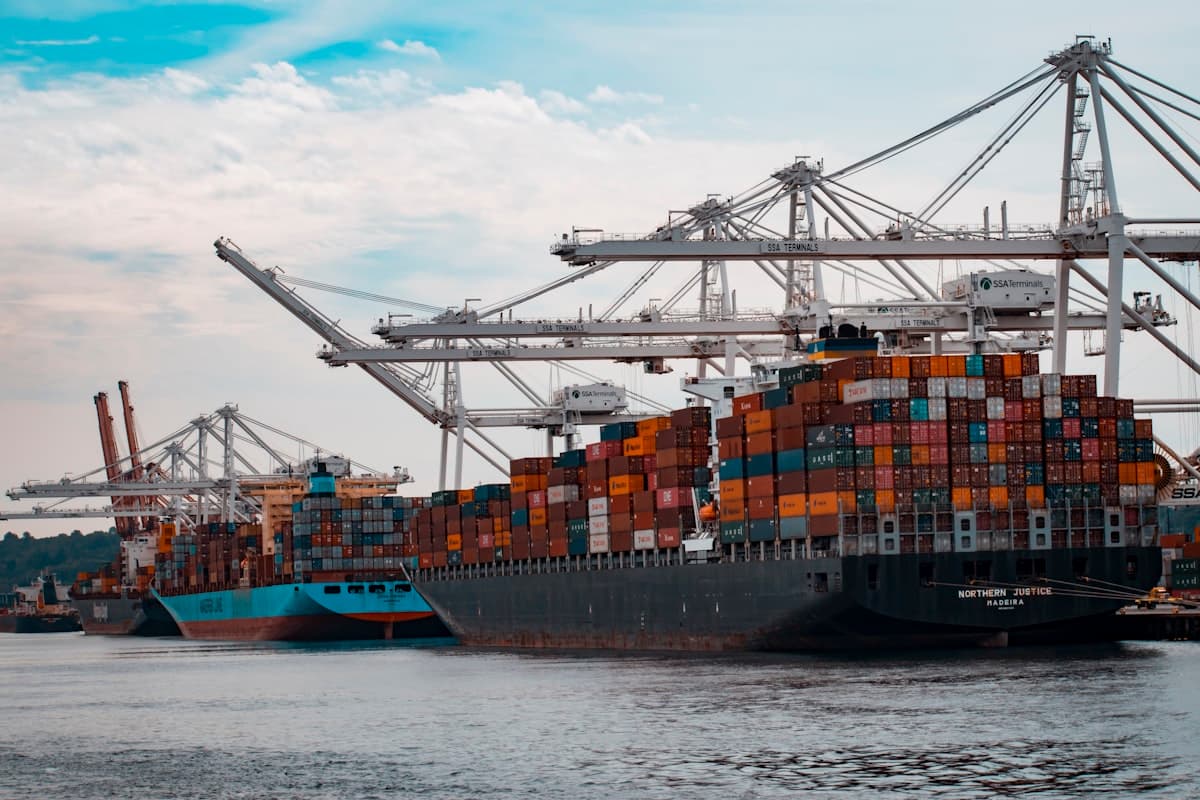

Supply chains involve a lot of moving parts — literally. Products need to be sourced, manufactured, stored, tracked, shipped, and delivered. Each step involves data, decisions, and coordination between multiple parties.
No single piece of software handles all of it. Modern supply chain management relies on multiple specialized systems, each handling a specific function, working together to keep goods moving efficiently from origin to customer.
Understanding the different types of supply chain software helps you identify where your operation has gaps, where you are using the wrong tool, and where investment in better systems would create the most impact.
Order Management
Order management software handles the lifecycle of every order from placement to delivery. When a customer places an order, the system confirms it, verifies payment, checks inventory, routes it to the appropriate fulfillment center, tracks its progress through packing and shipping, and updates the customer at each stage.
For businesses selling through multiple channels — your own website, marketplace platforms, retail partners — order management becomes more complex. The system needs to aggregate orders from all channels, prevent overselling by synchronizing inventory in real time, and route each order to the optimal fulfillment location.
A good order management system reduces the manual work of processing orders, minimizes errors in fulfillment, and gives customers the visibility they expect about where their order is and when it will arrive.
Inventory Management
Inventory management software tracks what you have, where it is, and how fast it is moving. At its simplest, it maintains accurate stock counts and sends alerts when inventory drops below reorder thresholds. At its most advanced, it uses AI to predict demand patterns and automatically adjust reorder points based on seasonality, trends, and lead times.
For businesses with multiple warehouses or fulfillment locations, inventory management needs to track stock at each location independently while providing a unified view across all locations. It needs to handle transfers between locations, account for inventory in transit, and determine the optimal location to fulfill each order based on proximity, stock levels, and shipping costs.
Poor inventory management shows up in two ways: stockouts that lose sales and excess inventory that ties up capital. Good software prevents both by keeping the right amount of stock in the right places at the right time.
Warehouse Management
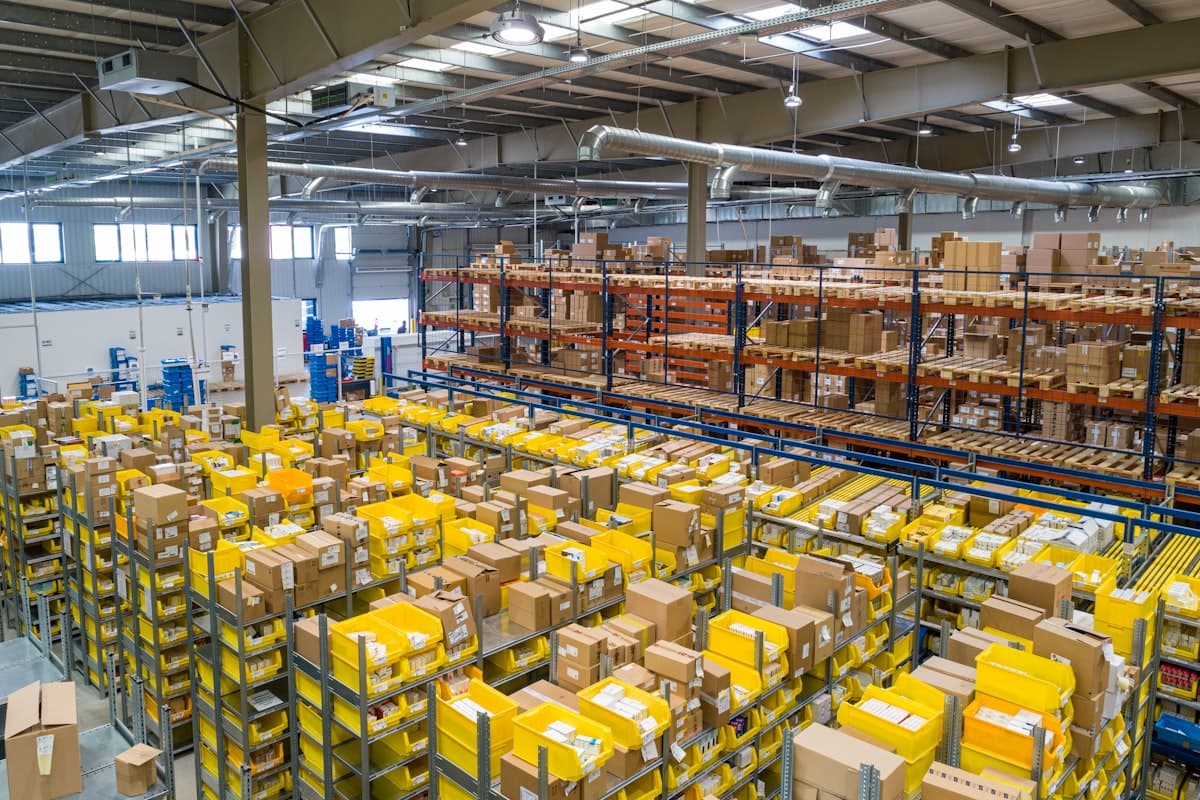
Warehouse management systems (WMS) handle the physical operations inside a warehouse. Where products are stored. How workers navigate the warehouse to pick orders. How incoming shipments are received, inspected, and shelved.
A well-implemented WMS optimizes warehouse layout by grouping frequently ordered products together, reducing the distance workers walk to pick orders. It manages bin locations so workers know exactly where to find every item. It handles receiving workflows so incoming inventory is inspected, counted, and shelved quickly.
For high-volume operations, WMS can integrate with automation equipment — conveyor systems, robotic pickers, automated sorting — to further increase throughput and accuracy.
Shipping and Logistics
Shipping software manages the movement of goods from your warehouse to the customer. It handles carrier selection, rate comparison, label generation, tracking number assignment, and delivery confirmation.
For businesses shipping at scale, the software compares rates across carriers in real time to find the most cost-effective option for each shipment. It supports multiple shipping methods — ground, express, freight, international — and handles the documentation requirements for each.
Route optimization software, often used alongside shipping platforms, plans the most efficient delivery routes for businesses that handle their own last-mile delivery. This reduces fuel costs, delivery times, and the number of vehicles needed.
Demand Forecasting
Demand forecasting software predicts how much of each product you will need in the future. Traditional forecasting relies on historical sales data and simple trend analysis. Modern forecasting uses machine learning to incorporate a much wider set of inputs — market trends, competitive activity, weather patterns, economic indicators, promotional calendars.
Accurate demand forecasting is the foundation of efficient inventory management. When you know what demand will look like next month or next quarter, you can order the right quantities, allocate warehouse space appropriately, and staff your fulfillment operations to match.
The cost of bad forecasting is significant. Overestimating demand means excess inventory, storage costs, and potential waste. Underestimating means stockouts, lost sales, and disappointed customers.
Supplier and Procurement Management
Procurement software manages the upstream side of your supply chain — relationships with suppliers, purchase orders, pricing agreements, delivery schedules, and quality tracking.
It centralizes supplier information so your team can compare prices, track delivery performance, and manage contracts in one place. It automates purchase order creation when inventory hits reorder points. It tracks supplier performance metrics — on-time delivery rates, defect rates, price consistency — so you can make data-driven decisions about which suppliers to grow with and which to replace.
For businesses managing dozens or hundreds of suppliers, procurement software is the difference between strategic sourcing and reactive purchasing.
Business Intelligence and Analytics
Supply chain analytics software takes the data generated by all of your other systems and turns it into actionable insights. It tracks key performance indicators — on-time delivery rates, order accuracy, inventory turnover, cost per order — and presents them in dashboards that highlight what is working and what needs attention.
Advanced analytics goes beyond reporting. It identifies patterns and correlations that are not obvious from looking at individual metrics. A slight increase in supplier lead times that will cause stockouts in three weeks. A shift in regional demand that suggests reallocating inventory. A carrier whose costs are rising faster than their service quality justifies.
Cloud vs. On-Premise
Supply chain software can be deployed in the cloud or on your own infrastructure. The choice affects cost, flexibility, and control.
Cloud-based systems are subscription-based, require no hardware investment, and scale automatically with usage. They are accessible from anywhere, which matters for distributed supply chain operations. Updates and security patches are handled by the provider.
On-premise systems run on your own servers. They offer more control over data, more customization options, and can be necessary for businesses with strict data sovereignty or regulatory requirements. The trade-off is higher upfront investment, ongoing maintenance responsibility, and less flexibility to scale.
Most businesses today default to cloud-based solutions unless specific regulatory or security requirements mandate otherwise.
Choosing the Right Combination
No business needs every type of supply chain software. The right combination depends on the complexity of your operation, the volume you handle, and where your current biggest pain points are.
Start with the bottleneck. If orders are getting lost or delayed, start with order management. If you are constantly overstocked on some products and out of stock on others, start with inventory management and forecasting. If your shipping costs are eating into margins, start with logistics optimization.
Prioritize integration. Whatever systems you choose, they need to share data seamlessly. An inventory management system that does not talk to your order management system creates more problems than it solves. Evaluate integration capabilities as carefully as you evaluate features.
Plan for growth. Choose systems that can handle your operation at twice its current size. Migrating supply chain software is disruptive and expensive. It is worth investing in systems that will grow with you.
Building Supply Chain Solutions With Mindwerks
At Mindwerks, we help businesses design and build supply chain software that fits their specific operations. Whether that means implementing commercial platforms, building custom solutions, or integrating existing systems that are not talking to each other, we focus on solving the problems that cost you the most.
If your supply chain operations are outgrowing your current tools, let us talk. We will help you identify the gaps and build a system that keeps everything moving.